
Some things in life just… happen. You don’t analyse them, you don’t admire them, you don’t even acknowledge them. They sit in the same category as blinking, breathing, and, standing, and so on.
For me, getting out of bed belonged firmly in that category.
For more than 40 years, it took about two seconds.
Wake up → swing myself up → legs down → stand → begin daily chaos.
Two seconds. No warm-up. No stretching. No internal pep talk.
Until one June morning in 2025, those two seconds quietly went on strike.
The accident that changed a simple morning
A cycling accident left me with abdominal injuries and internal bleeding. Four days in hospital, and longer rehab waiting at home. Not ideal, but manageable, I thought.
The real surprise arrived the morning after I got discharged.
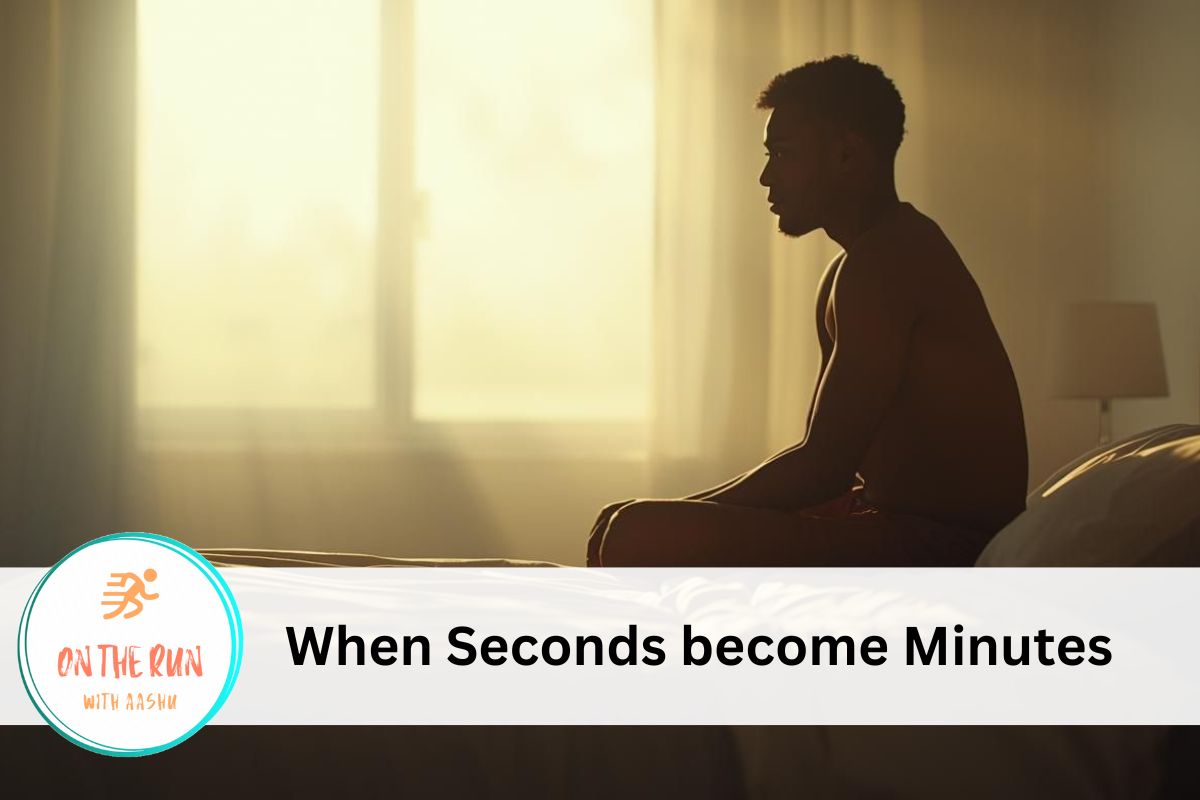
Like every other day of my life, I opened my eyes, and tried to get out of bed.
Except this time, my body responded with a very firm:
“Boss, not today.”
I had momentarily forgotten I was injured.
My abdomen, on the other hand, remembered every detail and refused to cooperate. Very stubbornly, I might add.
It was as if my body had held a secret internal meeting and unanimously voted against vertical movement, or for that matter any type of movement that involved recruitment of abdomen muscles and glutes.
The Six-Minute struggle
Naturally, I tried again.
And naturally, nothing happened.
What followed was a slow-motion, painfully honest attempt at sitting up — something that would’ve gone viral on the internet if anyone had recorded it.
Roll slightly → stop
Push with hands → stop
Angle differently → stop
Breathe → try → stop
By the time I finally sat upright: 3 minutes gone.
Turning my body to place my feet on the floor took another couple of minutes.
Standing up? That was the season finale.
Six minutes for something that used to take two seconds.
A 180x slowdown. Even my Coros sports watch would refuse to calculate that pace.
For several days after, I timed myself. Runner instincts — what to do?
And the numbers stayed between 3 and 6 minutes.
I was improving, yes. But the “start of day” sequence felt like a full workout.
The body’s hidden co-ordination
This entire experience made me realise something I hadn’t genuinely appreciated before:
The human body is a perfectly synchronized orchestra.
You don’t notice the melody when everything works.
In fact, you don’t even realize an orchestra is playing.
But let one instrument fall silent—
one muscle protest,
one organ slow down—
and the entire symphony stumbles.
Getting out of bed isn’t one movement.
It’s hundreds of muscles, joints, nerves, blood vessels, bones, and signals working in perfect harmony.
And when that harmony breaks,
even two seconds can become six minutes.
The small things aren’t small
During recovery, the big learning was simple:
It’s the small, everyday movements that hold our life together.
Not the marathon finishes.
Not the race medals.
Not the big milestones.
But the tiny transitions we never acknowledge — sitting up, turning, standing, bending, striding — until one day they stop being easy.
The day one of those movements becomes difficult, you suddenly realise how privileged you were when it was effortless.
I definitely did.
Listen to your body, and be kind to it
If this experience taught me anything, it’s this:
Don’t wait for your body to send a rude awakening before appreciating what works today.
We chase the big achievements, but it’s the small, quiet movements that actually keep us functioning.
Listen to your body.
Be kind to it.
And be grateful for every little motion that happens without effort.
They aren’t small.
They aren’t routine.
And as I learned the hard way, they certainly aren’t guaranteed.
They’re everyday miracles — disguised as ordinary actions.
Discover more from On The Run with Aashu
Subscribe to get the latest posts sent to your email.
 On The Run with Aashu
Leave a comment